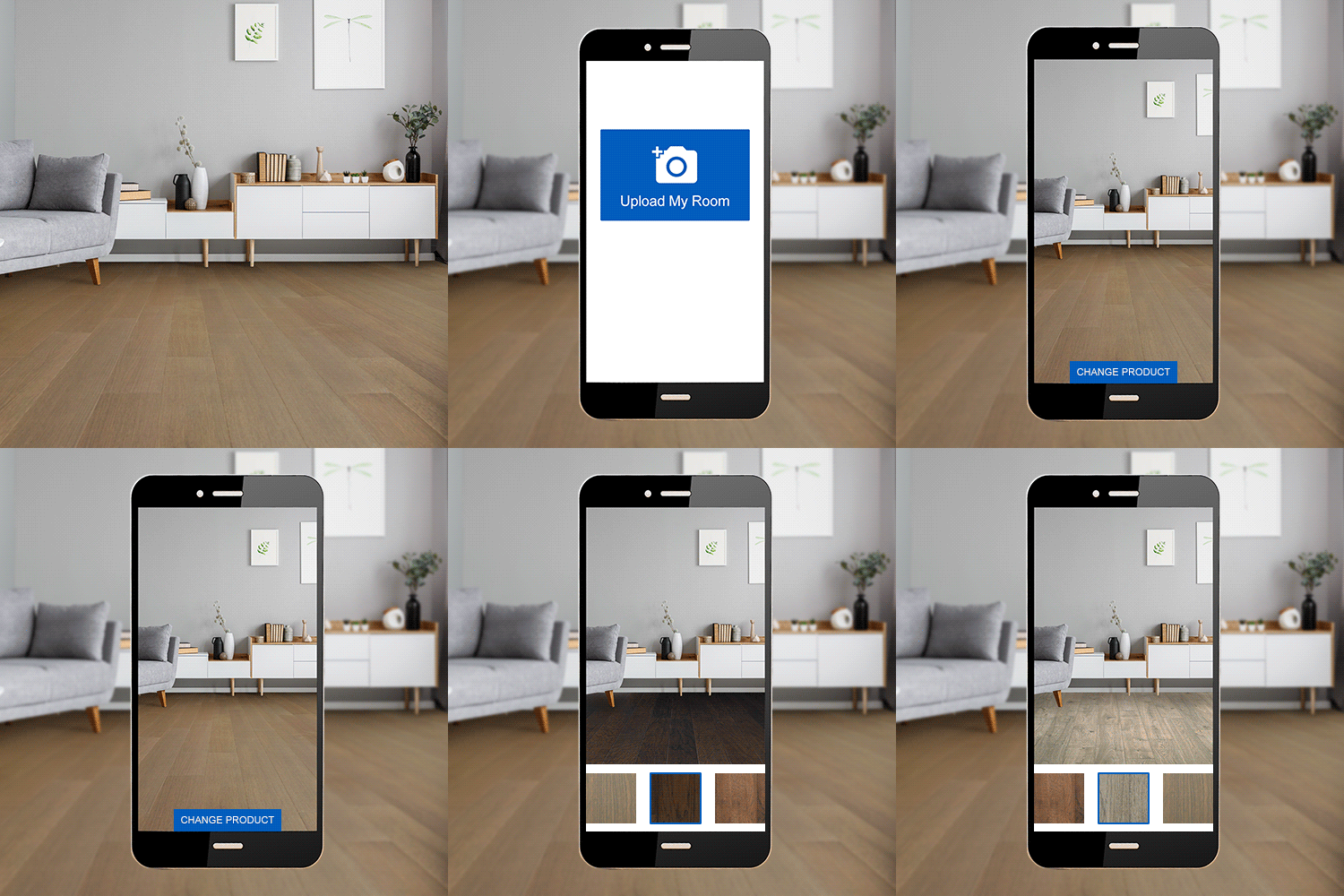


When you look for new flooring for your kitchen, you’ll have to balance beauty with practicality. Every surface of your kitchen is subject to abuse from spills and heavy use, and its floors take the brunt of it all.
That’s why few materials spark as much debate as wood. Hardwood is undeniably appealing, but kitchens are so notorious for spills and other damage, it begs the question: are wood floors in the kitchen a good idea?
We’ll set the record straight. Let’s get to the bottom of the issue of whether wood floors in the kitchen are right for your home.
Why Homeowners Choose Wood Floors in the Kitchen
The natural richness of hardwood is something other materials struggle to match. Its grain patterns, subtle imperfections, and warm tones make for an interior atmosphere that’s welcoming rather than sterile. For some homeowners, these facts alone justify the choice. Some other reasons include:
Seamless flow throughout the home: The more open-concept your home, the more you’ll benefit from hardwood. When you extend wood floors in the kitchen to your living or dining room, you’ll avoid jarring transitions and create a sense of spaciousness.
Comfort underfoot: Wood floors in the kitchen can be softer and warmer than porcelain or ceramic tile, which makes standing at the stove or island more comfortable. In colder climates, wood tends to hold warmth better than tile, even more so when paired with rugs or runners.
Boosting resale value: Homebuyers notice hardwood immediately. They might raise their eyebrows if they spot it in the kitchen, but they’ll still equate it with quality and sophistication. When maintained properly, wood floors in any room can potentially elevate the value and appeal of your whole home.
The Challenges of Kitchen Hardwood Floors
The biggest threat and the number one strike against wood floors in the kitchen is moisture. Spill some pasta water, have a leaky dishwasher, and that liquid can seep into the planks and cause problems. And unlike tile or vinyl, wood won’t bounce back easily after water damage sets in.
The kitchen is probably the busiest space in your home. Stools and chairs get dragged throughout it, pots and pans are dropped, and pets skitter across the floor playing or hunting for scraps. These moments can leave scratches, scuffs, and dents. Daily wear like this can dull the smooth finish that made hardwood appealing in the first place.
You can’t neglect your wood floor once it's installed. It needs regular cleaning, resealing, and eventual refinishing to stay looking good. Some homeowners embrace the upkeep as part of hardwood’s charm, but others find it an ongoing chore compared to more low-maintenance options.
Hardwood is definitely a pricier kitchen flooring choice in both upfront installation and long-term care. If your floor is damaged by water or wear, repairing it can be costly. Budget-conscious households might find this factor alone tips the scales towards alternatives.
Best Types of Wood Floors for Kitchens
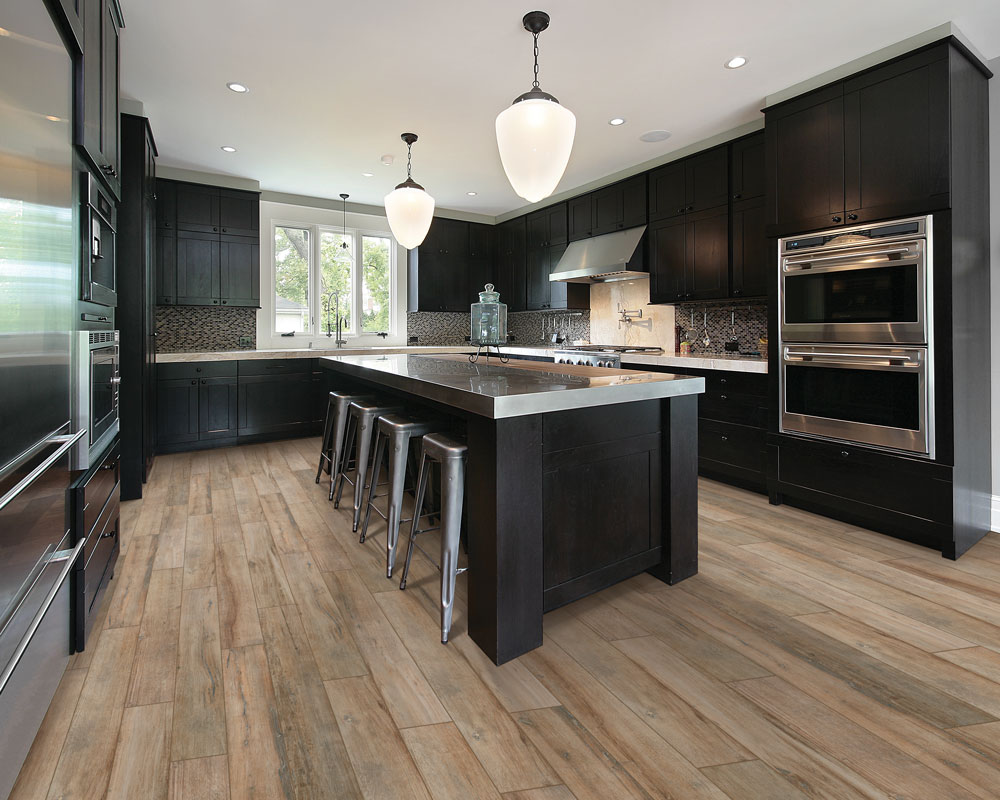
If you’re committed to installing wood floors in your kitchen, engineered hardwood often outperforms traditional wood planks. It’s designed with a layered construction that resists warping and expansion when exposed to moisture or humidity. Solid hardwood can still work, but in a room as prone to spills as the kitchen, engineered wood floors offer better stability.
If you do want to keep to traditional solid wood for your kitchen, look for a harder species. Oak, maple, and hickory tend to hold up better against dents and scratches than a softer wood like pine, possibly giving you a little more breathing room in your busy kitchen.
Also, the finish matters as much as the wood itself. A matte or wire-brushed finish can help disguise small scratches. A polyurethane coating can provide a durable layer of protection against spills and wear. Additionally, a site-finished floor can create tighter seams that block moisture from seeping between each plank.
How to Care for Wood Floors in the Kitchen
1. Clean up spills immediately: Wood and standing water are a bad combination. The smallest puddle left behind after a spill can leave lasting stains.
2. Sweep and vacuum regularly: Tiny grit particles and food crumbs can wear away at a wood floor’s surface. Make sure to regularly sweep or use a hardwood-safe vacuum.
3. Use protective pads and rugs: Use furniture pads under chairs and stools so they won’t scratch your flooring when they move across it. Place washable rugs in high-traffic areas for added protection and comfort.
4. Stick to wood-safe cleaners: Don’t use harsh chemicals that can strip finishes and weaken the surface. Check your manufacturer’s guidelines for cleaners formulated specifically for hardwood to keep it looking polished.
5. Plan for refinishing: Even with optimal care, your wood floor in the kitchen will eventually show some wear. Refinish it every decade or as needed to restore its appearance and extend its lifespan.
Wood-Look Alternatives for Kitchens
You don’t have to choose actual hardwood if you want to achieve that warm, natural look. Modern flooring technology has created durable, attractive, and budget-friendly options that mimic wood grain. It can be so convincing that your guests won’t be able to tell the difference!
Luxury Vinyl Plank (LVP)
Vinyl has come a long way in recent years. The luxury planks of today are waterproof and practically indistinguishable from real wood thanks to advanced imaging and texturing. If your household is full of kids or pets, it could be the ideal solution.
Laminate Flooring
Laminate used to be considered the cheap alternative, but it’s gained serious ground in both style and water resistance. The newest products on the market are designed to handle moisture better than ever, which makes them a viable kitchen option if you’re looking for affordability and resilience.
Wood-Look Tile
You can find both porcelain and ceramic tiles designed to mimic hardwood. They offer unbeatable durability and water resistance compared to traditional wood floors in the kitchen. If you live in a humid or flood-prone region, they’re especially useful, though you may feel like you’ve sacrificed some warmth and softness underfoot.
When Wood Floors in Kitchens Make Sense
Although we don't tend to recommend wood floors in kitchens, there are some situations where it just makes sense.
- Open-concept homes: If your kitchen flows directly into other spaces, hardwood can be part of a seamless transition without awkward flooring breaks.
- Homes without heavy spill threats: If your family doesn’t have young children or pets sloshing their water bowls, wood floors can be far less of a risk.
- Commitment to maintenance: You can’t simply install and forget your wood floors. You need to be willing to take the time to sweep and wipe up spills immediately.
- Preference for comfort and character: For many, the natural aging and patina of hardwood is simply a part of its charm. If this is you, don’t worry about the downsides!
Committing to Wood Flooring
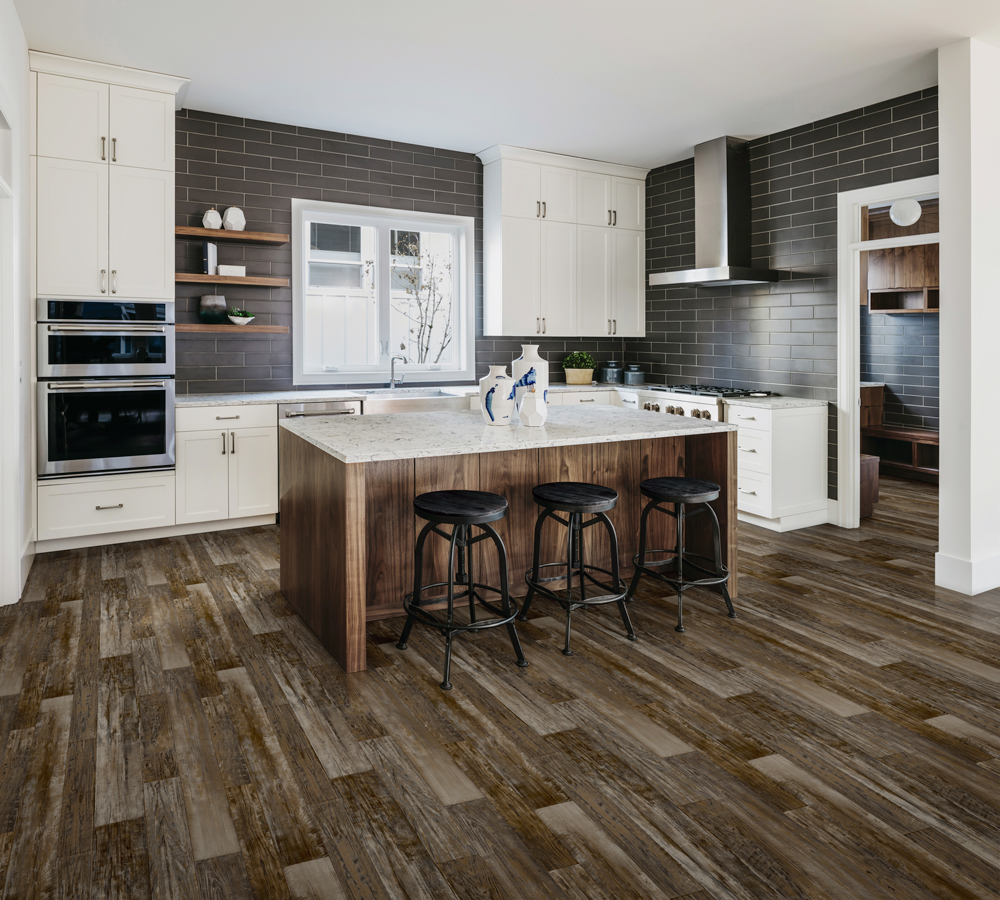
Wood floors in the kitchen are a bold trade-off of beauty and comfort over total practicality. You’ll need to stay diligent to guard against scratches, stains, and water damage, but for many households that’s a reasonable request. For others, that constant maintenance might make the option considerably less appealing.
If you’re in the latter category, opt for wood-look alternatives like LVP, laminate, or tile. You can still capture the natural grain aesthetic and warmth that make traditional hardwood so desirable.
If you're ready for a flooring upgrade and live in one of our service areas we'd love to hear from you! Reach out to the team at Empire Today®. We’re ready to perform a FREE in-home flooring estimate and provide you with plenty of options for choosing the new kitchen flooring of your dreams.